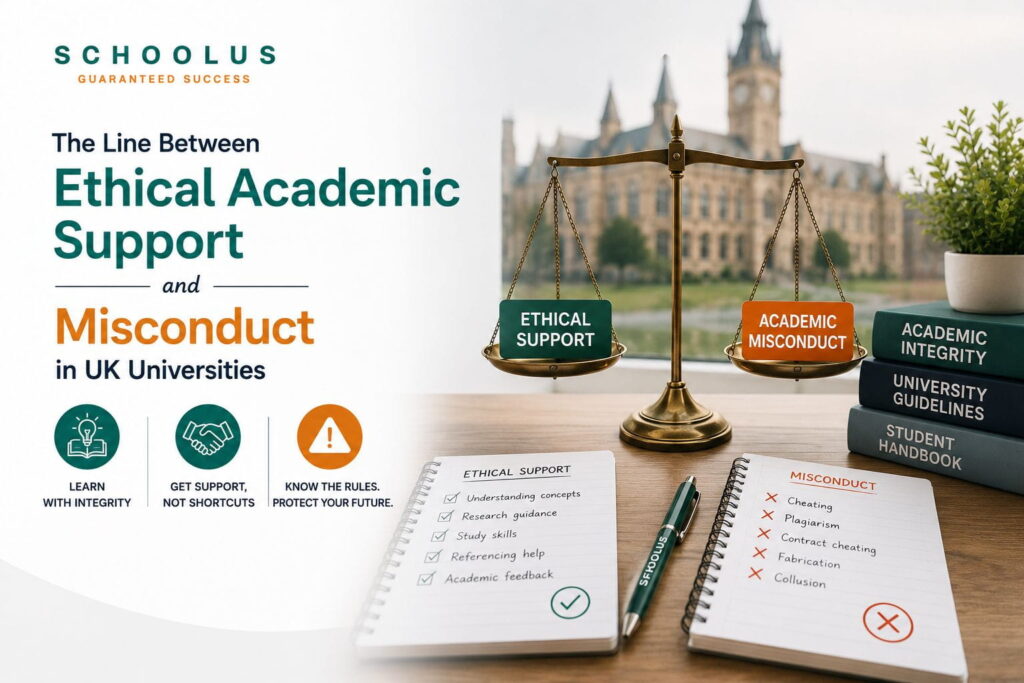
The Line Between Ethical Academic Support and Misconduct in UK Universities
UK universities maintain strict regulations regarding academic integrity. With the rise of AI tools and online resources, understanding the boundary between legitimate academic assistance and academic misconduct is critical for every student. Crossing this line—even accidentally—can result in severe penalties, including expulsion.
Understanding Academic Misconduct
Academic misconduct generally falls into three categories:
- Plagiarism: Presenting someone else’s work, ideas, or words as your own without proper citation.
- Contract Cheating: Paying a third party to write an assignment from scratch and submitting it under your name.
- Collusion: Working secretly with other students on an individual assignment.
Universities are increasingly sophisticated at detecting these infractions. Tools like Turnitin now flag structural similarities, while academic panels are trained to spot inconsistencies in a student’s personal writing voice.
What Constitutes Ethical Academic Support?
Ethical support focuses on improving your skills and refining your original work, rather than doing the work for you. Legitimate assistance includes:
- Proofreading and Editing: Correcting grammatical errors, improving sentence flow, and ensuring your vocabulary aligns with academic standards.
- Structural Guidance: Helping you organize your arguments logically so your points hit harder.
- Feedback on Drafts: Pointing out weak arguments or areas where more evidence is required.
Ethical support acts as a tutor. It enhances your understanding of the subject and leaves you fully responsible for the ideas, research, and final submission.
Need safe, reliable help? If you are struggling to structure your arguments, SchoolUs provides 100% ethical academic support. Our experienced UK-based educators will help you refine your work without compromising your academic integrity. Explore our Proofreading and Editing services today to elevate your grades safely.